 Research Use Only — documentation confirmed by inquiry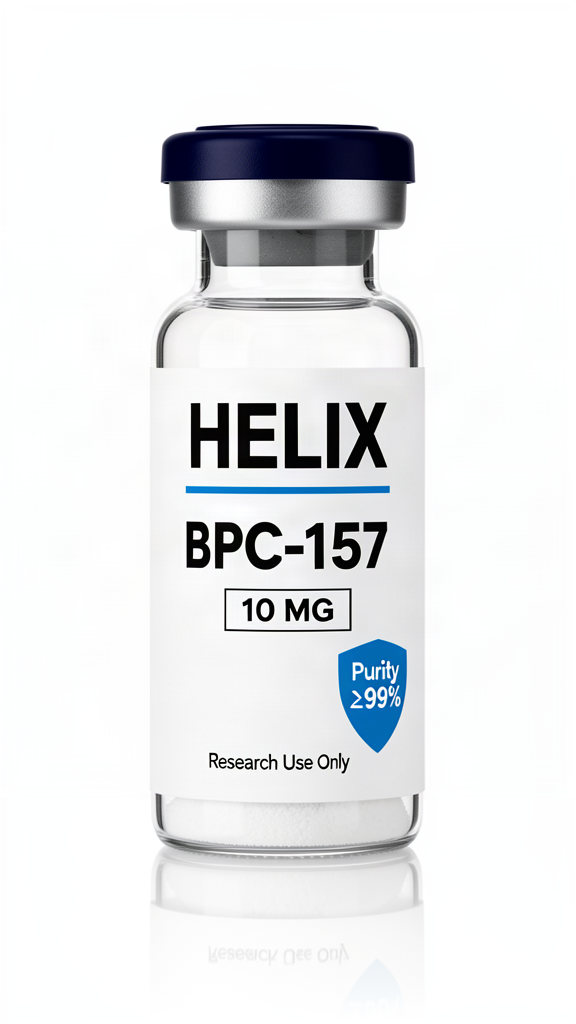
BPC-157
| Units | Discount |
|---|---|
| 1–2 | 0% |
| 3–4 | 10% |
| 5–6 | 15% |
| 7–9 | 20% |
| 10–+ | 30% |
BPC-157 (body-protection-compound pentadecapeptide) · ≥98% (HPLC)
BPC-157 is a synthetic pentadecapeptide derived from a partial sequence of human gastric juice protein BPC, supplied as a characterized reference material for in-vitro tissue-repair and signaling research. Research Use Only.
More in Cytoprotection blend
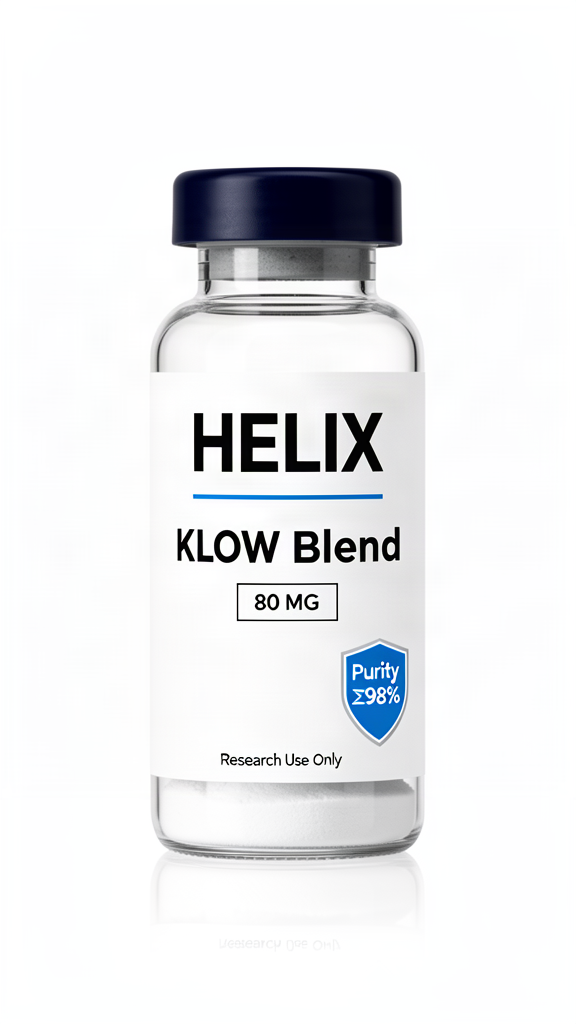
KLOW Blend
Per-unit pricing · volume discounts at 3+ units · inquire for current availability
Multi-peptide reference blend (GHK-Cu, BPC-157, TB-500, KPV) characterized for in-vitro study of cytoprotection- and matrix-associated signaling pathways. For research use only.
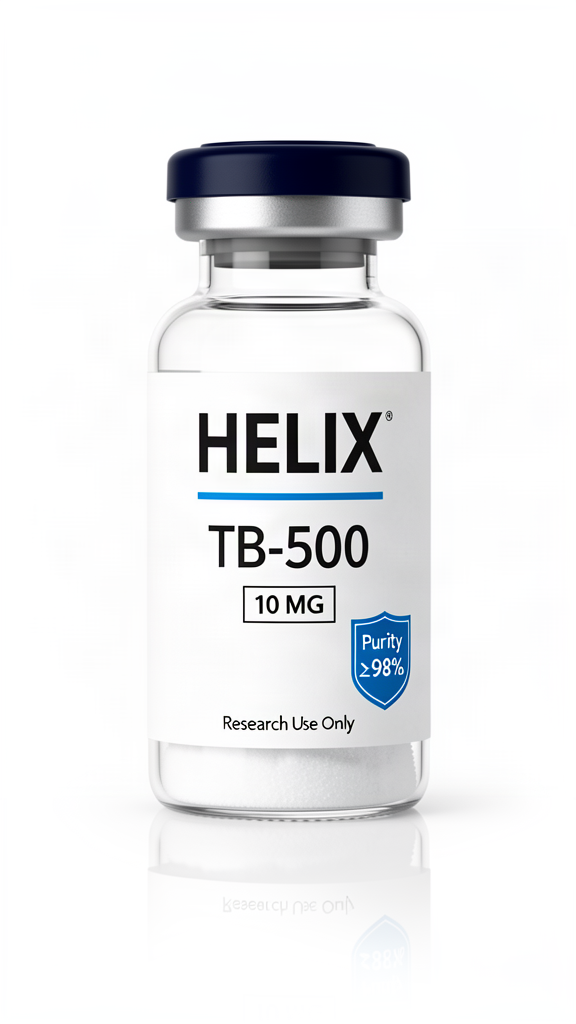
TB-500
Per-unit pricing · volume discounts at 3+ units · inquire for current availability
TB-500 is a synthetic acetylated heptapeptide corresponding to the actin-binding active-site region of thymosin beta-4, supplied as a characterized reference material for in-vitro cell-migration and cytoskeletal research. Research Use Only.
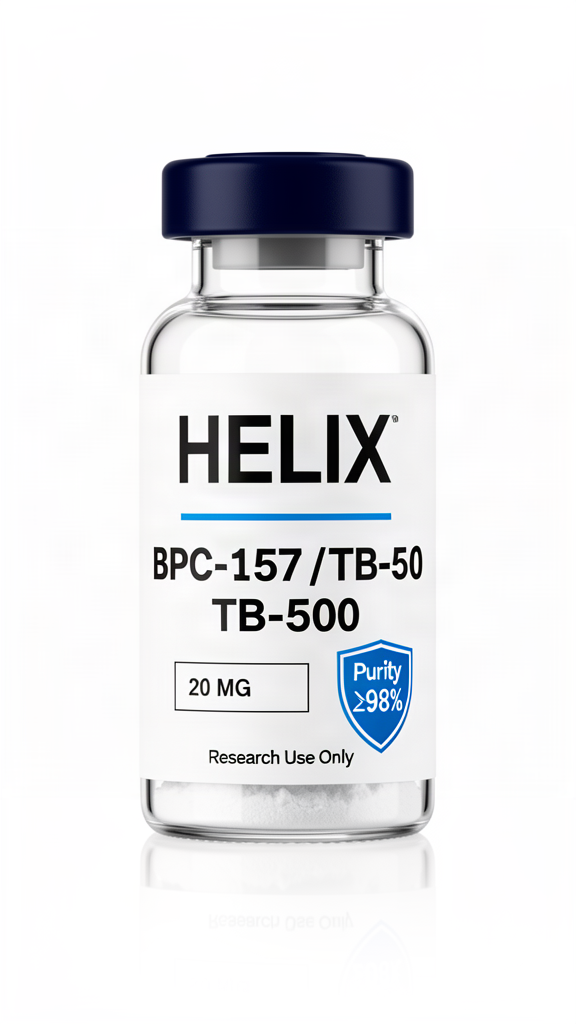
BPC-157 / TB-500 Blend
Per-unit pricing · volume discounts at 3+ units · inquire for current availability
Two-peptide reference blend (BPC-157, TB-500) characterized for in-vitro study of overlapping tissue-repair and cytoskeletal-signaling pathways within a single analytical sample. For research use only.
Research context and documentation
- Why researchers study it
- Studied in vitro as a stable, gastric-derived pentadecapeptide fragment used to investigate nitric-oxide-pathway and growth-factor-receptor involvement in tissue-repair signaling models.
- Mechanism themes in research
- Nitric-oxide synthase pathway modulation in vitroVEGFR2 and growth-factor receptor signaling studiesAngiogenesis-related endothelial-cell assay modelsAnalytical reference standard for peptide identity and purity (HPLC/MS)
- What the evidence does not establish
- Published references describe research context only. They do not establish safety, efficacy, biological activity, or any outcome in humans or animals, and HELIX BioScience makes no such claims.
- Quality markers
- ≥98% (HPLC)MS contextCOA statusStorage stated where verified
- Documentation status
- Product specifications and COA status are shown on this page. Current lot documentation is provided when issued and matched to the offered lot.
An orientation to BPC-157 as a synthetic pentadecapeptide reference material studied in cytoprotection-focused laboratory research.
What it is
BPC-157, short for Body Protection Compound-157, is a synthetic pentadecapeptide supplied here strictly as a research-use-only reference material. Its fifteen-residue sequence is related to a fragment of a gastric protein, and it is catalogued under the cytoprotection research category. In an analytical context it is identified by CAS number 137525-51-0, the molecular formula C62H98N16O22, and a nominal molecular weight near 1419.5 g/mol.
Why it appears in the literature
Within in-vitro and pre-clinical research settings, BPC-157 is frequently cited in studies that examine tissue and cellular protection models. The compound is used purely as a characterized reagent for laboratory research; the discussion here concerns its physicochemical identity and the experimental contexts in which it is referenced, not any applied use.
| Full name | BPC-157 (body-protection-compound pentadecapeptide) |
| Research theme | Cytoprotection blend |
| CAS number | 137525-51-0 |
| Molecular formula | C₆₂H₉₈N₁₆O₂₂ |
| Molecular weight | 1419.5 g/mol |
| Purity | ≥98% (HPLC) |
| Physical form | Lyophilized powder |
| Storage | −20 °C, desiccated, protected from light |
Sequence
Reported research areas
- Nitric-oxide signaling pathway studies
- Growth-factor receptor modulation in tissue-repair models
- Angiogenesis-related in-vitro assays
- Analytical reference standard for peptide identity and purity (HPLC/MS)
Credible sources
COA status shown
Request the current documentation packet for the offered material. When available, it identifies the reported HPLC result and any identity method; public product specifications are not current lot results.
- HPLC result, when reported
- Identity method, when reported
- Appearance, molecular weight, and storage where documented
- Lot number and testing status
Specimen Certificate of Analysis
| Product | BPC-157 (reference) |
| Status | Format preview — not a current lot |
| Purity (RP-HPLC) | 98%+ |
| Identity (MS) | Confirmed · 1419.5 g/mol |
| Appearance | Lyophilized powder |
| Storage | −20 °C, desiccated |
Format preview only. Current lot records and measured results are not published here until supplied and verified.
Loading verified reviews…
Reviews come only from buyers we can match to a real order, and each is moderated before it appears. We never publish fabricated or incentivized reviews.